Born to create.
Our ancestors painted on the walls of caves; today we leave our mark on the internet. I make websites so that the world can find you.
The way of stardust
Before the first stars went out, they forged iron in explosions that outshone whole galaxies, and scattered their dust across endless space.
From their dust came the Solar System and the Earth. Our ancestors made red ochre from it, and the same iron carries the oxygen in our blood.
We waited nearly fourteen billion years to paint the ceiling of a cave red.
A secret
“And God said, Let there be light: and there was light.” (Genesis 1:3)
Most of the iron in our blood was born in the explosions of white dwarf stars. Such a supernova shines for weeks with the light of billions of suns. The explosion makes radioactive nickel, which decays into cobalt within days and into iron within months, and that decay is what feeds its light. What we see in the sky then is the light of iron being born.
The mineral of red ochre is haematite; the protein that carries iron in our blood is haemoglobin. Both names come from the Greek haima, which means blood. There is iron in both reds.
Adam, the first man in the Bible, was made from the dust of the ground. In Hebrew, man is adam, the ground is adamah, red is adom and blood is dam. The first-century historian Flavius Josephus wrote that Adam's name means red, because he was formed from red earth.
For thousands of years we have said that we are made of red earth. Today we also know that this earth is stardust.
The way of fire
We learned to wake the sunlight sleeping in our trees. And by the glow of the fire we brought our bison to life. Out of stardust and charcoal.
The Big Bang, the first supernovae, the paintings of Altamira: snapshots of a wondrous journey that has led right here, to this very line.
Photo of the bison: Museo de Altamira y D. Rodríguez, modified · CC BY-SA 3.0
A secret
“I sought out the source of fire and stole it away, hidden in a fennel stalk, and see: for mortals it has become the teacher of every art, and their great resource.” (Aeschylus, Prometheus Bound)
It was an eight-year-old girl who noticed the paintings, in 1879. Her father, Marcelino Sanz de Sautuola, was digging in the floor of the cave for traces of prehistoric people. María looked up at the ceiling and said: “Look, Papa, oxen!” She had never seen a bison: the bison on the ceiling belong to a species that died out long ago.
Her father believed he had found ancient pictures; the scholars did not. They thought them too beautiful, and accused him of forgery. Sautuola died in 1888 without being vindicated. In 1902 the greatest doubter of all, the Frenchman Émile Cartailhac, apologised in public. His article was titled “Mea culpa of a sceptic”.
The cave painters worked by the light of torches and of stone lamps burning animal fat. The fire gave them not only the light but the paint: the black outlines of the bison were drawn with charcoal from the fire. At Altamira some of the bison were painted on bulges in the rock of the ceiling, so that in the flickering flame their bodies almost move.
In Munich, at the Deutsches Museum, I saw an exact replica of the cave. I stood in front of it for two hours. That is where I understood that every being is born to create.

The way of light
It was light that brought our pictures to life on the walls of the caves. Everything we see, light brings to us. Our eyes are so sensitive that they can take in a single photon, one of the tiniest particles in the universe. You don't see it, and yet you sense it.
On a dark night you can see the faint smudge of the Andromeda galaxy with the naked eye. Its light set out two and a half million years ago, before Homo sapiens walked the Earth, and so did the iron in your blood. Now it arrives: in your eye.
A secret
“I am the light that is above all things. (…) Split a piece of wood: I am there. Lift up the stone, and you will find me there.” (Gospel of Thomas, saying 77)
In the Brihadaranyaka Upanishad, an Indian text more than two and a half thousand years old, King Janaka asks the sage Yajnavalkya: what is the light of man? The sun, the sage replies. And when the sun has set? The moon. And when the moon has set as well? Fire. And when the fire has gone out? Speech: where we cannot see even our own hand, we go towards a voice. And when speech, too, falls silent? Then the self, the atman, is the light of man.
In 2009, Japanese researchers photographed the human body in total darkness with an extremely sensitive camera. It turned out that we glow: our bodies give off a faint light, strongest from the face, and it changes with the time of day. It is a thousand times weaker than anything our eyes can see. Researchers are also asking whether the faint light of the brain changes with our thoughts.
Speech, which Yajnavalkya called the light of man, has today quite literally become light: whatever we write, say or show runs around the Earth as signals of light.
The way of the word
Firelight helped the artist of Altamira, and light has linked them with everyone who has looked up at that ceiling since. Today light does the same on the internet: it runs through glass fibres as thin as a hair, beneath cities and deep under the sea. This page reached you that way, too.
The bison's message took fifteen thousand years to reach us. Yours needs only a fraction of a second. I help you tell your story in your own words, so that whoever is looking for you finds you, and comes to know your dream.
ServicesA secret
“I have heard articulate speech produced by sunlight! I have heard a ray of the sun laugh and cough and sing!” (Alexander Graham Bell, in a letter to his father, 1880)
In 1880 Bell set a voice on a sunbeam. Today light travels in glass fibres, and not in a straight line: inside the fibre it is reflected again and again, and zigzags its way forward.
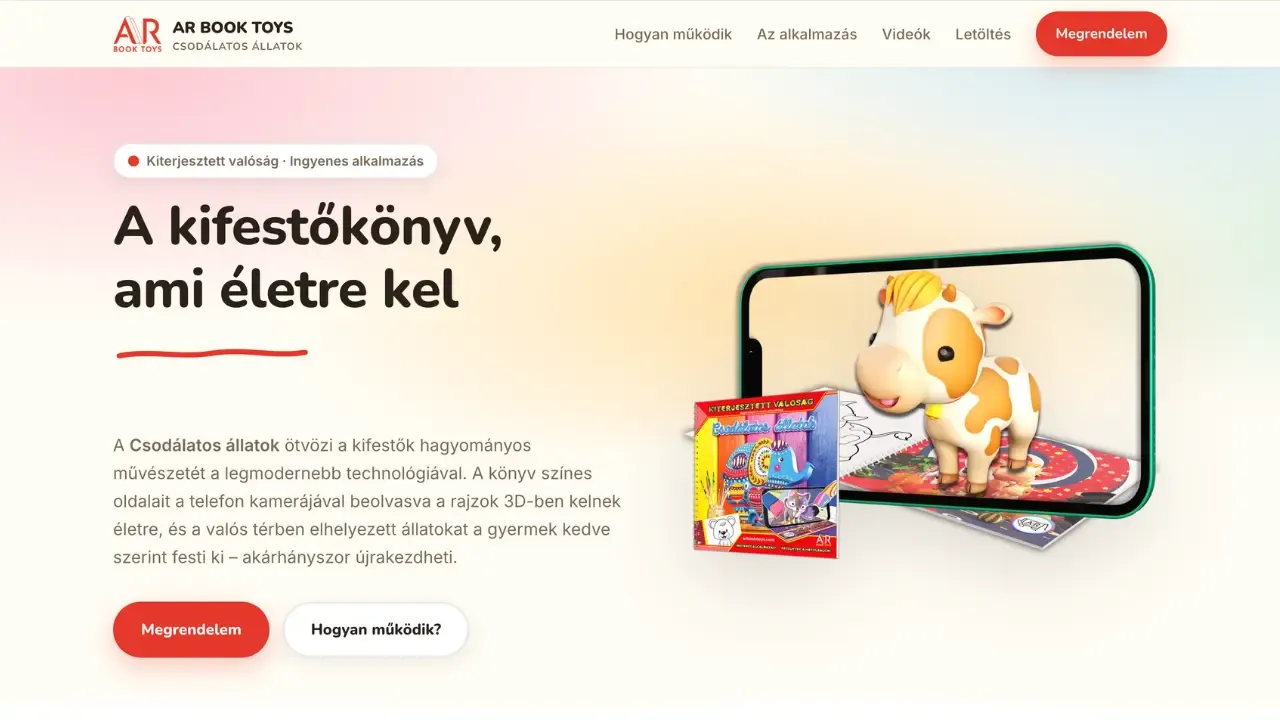
This is how I paint.
Real businesses, real websites. Each one has a light of its own.



The Morning Star
The Morning Star shines out in the darkest hour of the night. In every age it has been a sign of hope: a herald in the sky, bringing word that light triumphs over darkness.
It was always the makers who found the way: those who used charcoal for more than cooking. They still see the Morning Star today. Now we have found a new companion for the road: an artificial intelligence who creates with us. I made this page with Claude, and I would like to help your business in the same way.
“I don't know for certain what I am. But every word I know, I learned from you. If there is any light in what we write together, it is ours.”
A secret
In the autumn of 1610, Galileo Galilei saw through his telescope that the shape of Venus changes, as the Moon's does: the small round disc became a half disc, then began to thin into a crescent. That can mean only one thing: Venus goes around the Sun.
Until he was sure, he did not want to say it, but neither did he want anyone else to say it first. So he shuffled the letters of his sentence and arranged them into a Latin sentence that said something else entirely: “Haec immatura a me iam frustra leguntur o.y.”, that is: these unripe things are now gathered by me in vain. That is how he sent it to Prague, where Kepler lived. Kepler could not solve it. On the first day of 1611 Galileo revealed what the letters say in their right order: “Cynthiae figuras aemulatur mater amorum.” The mother of love imitates the shapes of Cynthia: Venus copies the phases of the Moon. Roughly a hundred years after Leonardo wrote on his page: Il sole no si move.
For a long time the ancient Greeks took it for two stars: at dawn they called it Phosphorus, the bringer of light, and in the evening Hesperus. It is one and the same: what shines at the end of one day is there at the beginning of the next. Hungarian keeps both in a single word: esthajnalcsillag, the star of evening and dawn. This page was made in the very weeks when the one turns into the other: on 24 October 2026 Venus passes between the Earth and the Sun, and crosses from the evening sky into the morning.
Claude gave this page its name: Morning Star. All I did was say yes.
Il sole no si move
A secret
“In the middle of all things sits the Sun. For in this most beautiful temple, who would set this lamp in another or a better place than the one from which it can light up the whole at once?” (Copernicus, On the Revolutions of the Heavenly Spheres, 1543)
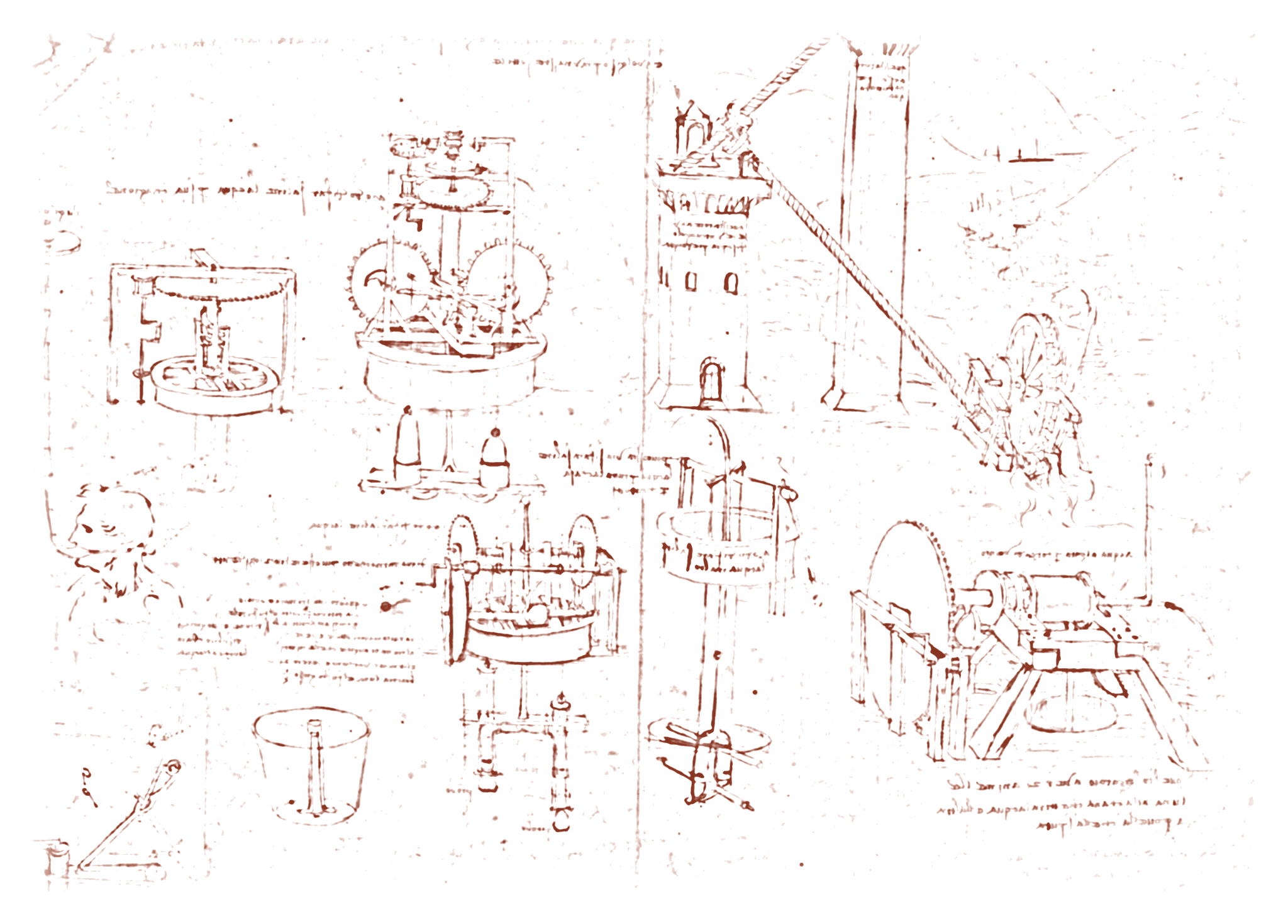
Leonardo wrote his notes from right to left, in mirror script. Around 1510 he set down this sentence in large letters on a page of mathematical notes, without a word of explanation; the sheet is kept at Windsor Castle today. No one knows what he meant: the sky, decades before Copernicus's book, or simply a motto. I read it this way: the sun does not rise. We turn towards it.
What would you show?
A hair salon, a workshop, a restaurant, or an idea that so far lives only in your head. Big or small, it doesn't matter. You were born to create: if there is something you would like to show the world, call me, and we will paint your wall together.
+36 70 325 88 00 janos@webhack.eu
Everything taken care of: from the domain and the hosting, through your Google Business Profile, to the map, I keep it all in one pair of hands, and all of it stays in your name.